

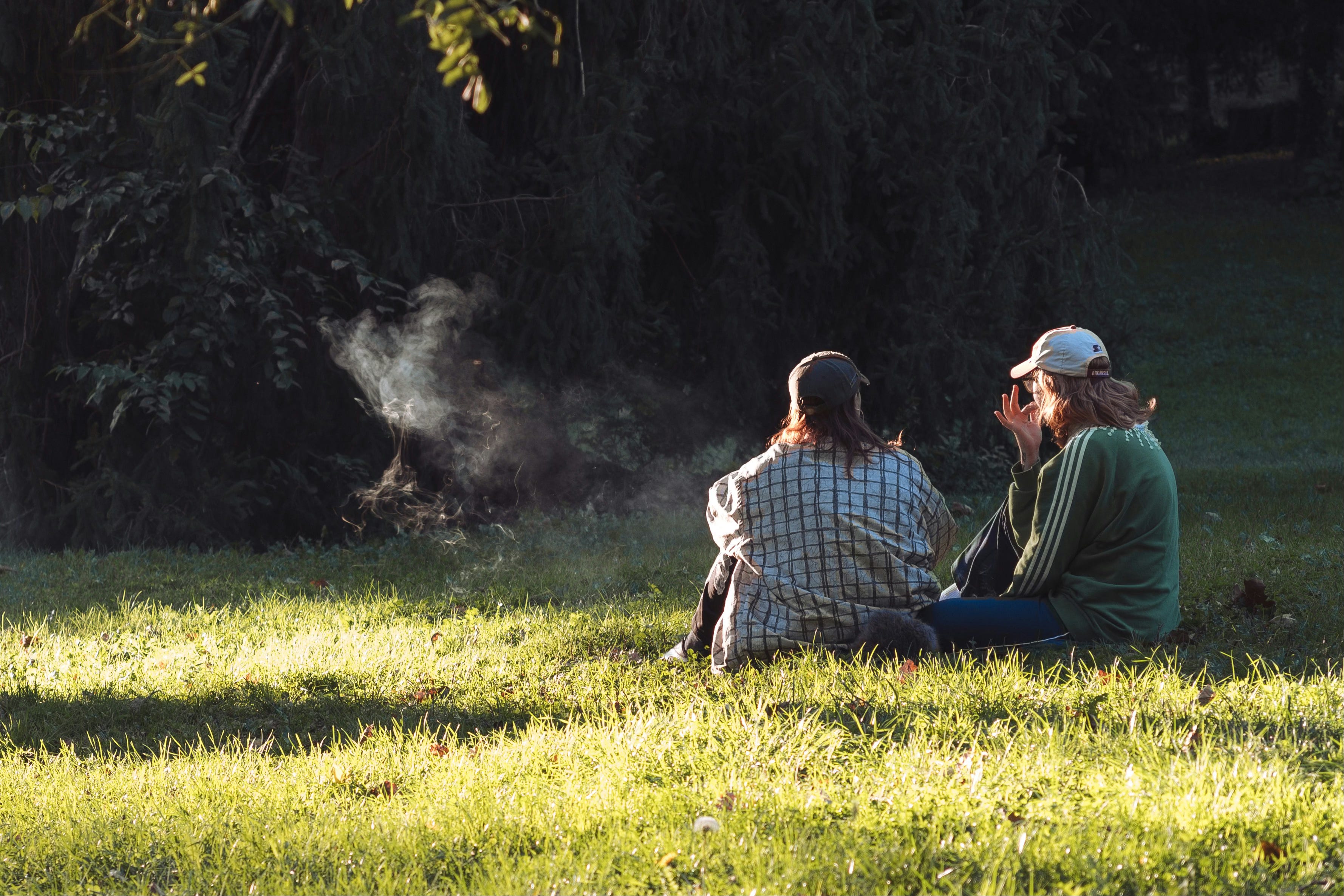
Focusing is practised in reciprocal pairs—being with, rather than fixing.
Image credit: Photo by Aleksandra Kovacic on Unsplash
“You cannot pour hospitality, generosity, innovation, or compassion into community relationships unless those same qualities are poured into you.”
— Will Guidara, Unreasonable Hospitality
This is Kira’s story of Befriending Within—self-compassion, resilience, and staying human in the work of community and systems change.
Befriending Within is Befriend’s ten-week introduction to Focusing—a gentle, embodied practice developed from the work of philosopher and psychologist Eugene Gendlin. You learn to turn towards whatever you’re carrying and simply be with it, in the body, without needing to analyse or fix it. Practised in reciprocal pairs—taking turns to focus and to companion one another—it grows self-awareness, self-compassion, creativity, and a steadier, more spacious way of being present, with yourself and with others.
Focusing grew from Gendlin’s deeper inquiry—developed across his philosophical work, including his book A Process Model—into how living systems carry themselves forward and change from the inside: an organic, interconnected way of understanding ourselves, one another, and change itself.
For people whose work asks them to hold a great deal—in community, care and systems change—it becomes the inner work that resources their outer work. Kira, a service designer and community-development practitioner at Anglicare working on community-led projects, came to Befriending Within in 2026 and will be assisting on the next round. In her own words:
I was in a place of realising that any of the professional development I could undertake wouldn’t necessarily transform me. What I needed was the inner work—to build my toolkit of how to be with complexity, and how to be with things no matter where they’re at, and to be with people. I needed to invest in my own resilience—and not just through hard things, but through nourishing things—so that I felt real and present, rather than looking for something out there. What I really liked was the reciprocity, because that’s a principle in the relational approaches I work with, and in my life. A practice that could let me slow down and go within, instead of always looking and seeking outside myself.
When I sit down to focus and drop in, I find things I didn’t know were there. I feel so present. This might sound weird, but I feel like I’m growing safely. The practice has enough structure—a flexible, adaptable structure—and even in the early stages there was enough there to go somewhere quite deep. There’s an explicit invitation to whatever’s there—whatever wants to be seen or known or understood. It’s a wholeness. And it feels very caring; there’s a nurturing that happens.
The biggest one is being seen. I deeply crave it, but it’s also really terrifying—in my vulnerability, showing up as my whole self, being totally honest. Focusing has allowed me to practise being seen safely. And that’s really healing—feeling in my body, not in my mind, and appreciating the richness of my inner experience. It’s a gift economy; there’s a reciprocity. And just being ourselves and being with is enough—we don’t need to know the answers, we don’t need to fix anything.
A recurring theme in my life is self-love and self-compassion. Sometimes it’s easier to extend compassion to another than to oneself. Focusing has helped me practise self-compassion—with various partners, some of them strangers—and that ripples into my work, and into everyone I encounter. It’s a genuine non-judgment. And it feels more authentic and more genuine than what I’d previously thought it would look or feel like; it’s allowed me to experience a deeper version of it. I used to talk about compassion as an orientation—but there’s a difference between that and true embodiment. It’s not something you switch on; it’s just there.
What I noticed most was that it helped me process and integrate what had been happening—to clear the air, clean the slate a bit—so that from that moment forward in my work I was better resourced. Like the oxygen-mask analogy: you put your own on first. It made me feel like I could keep going, even when it was hard—holding the expectations of community and of the organisation, being in between those.
The idea that this is the inner work needed for the outer work of systems change is very resonant for me—from my study in Theory U and presencing, and in the Inner Development Goals, which were developed in recognition of the inner work needed to make our outer work possible. We are part of these systems, and we are systems within ourselves; whatever’s out there is also in here, and we need to work on that in order to effect change.
I’ve tended to befriend people on the edges—I can remember examples right through my life. A lot of my colleagues, and a lot of the community we work with, live with neurodivergence, and I do too. There’s something about the sense of being “too much”—that’s something people can experience, and this is a space that can hold it. In focusing, we’re mirroring each other, and I think it helps us see we’re no different from each other.
This is a touchstone of Theory U, the field Kira draws on: as Bill O’Brien put it, “the success of an intervention depends on the interior condition of the intervener.” Tending the inner state of those who serve isn’t indulgence—it’s what makes the outer work possible.
A wider ripple
Kira’s experience isn’t unique. Across the course, participants described the same movement—from fixing to being with, from depletion to being resourced:
“I feel more resourced… it’s helped me be with big feelings without being taken over by them.”—a full-time carer
“I’m gentler with myself—and that changes how I am with others.”—a facilitator who mentors young people
“Having someone witness that vulnerability without judgment allows me to witness my vulnerability… it lessens that self-judgment. It’s given huge strength for this time right now.”—a participant navigating a period of homelessness
The inner work resources the outer work. Befriending Within isn’t a productivity practice; it’s a way of staying human—resourced, present and kind—in work that asks a great deal of us. Or, as Kira put it: being ourselves and being with is enough.
The next round of Befriending Within is forming now, with Kira assisting. If it speaks to you, or to someone you know who’s holding a lot in service of others, we’d love to tell you more.
“Your physically felt body is in fact part of a gigantic system of here and other places, now and other times, you and other people—in fact, the whole universe. This sense of being bodily alive in a vast system is the body as it is felt from inside.”
— Eugene Gendlin, Focusing
“We are rediscovering our interconnectedness; there are no isolated individuals in the natural world. Life seeks to affiliate with other life, and as it does that it makes more possibilities available, it makes more diversity possible.”
— Margaret Wheatley, The Unplanned Organization: Learning from Nature’s Emergent Creativity
About the course
Befriending Within is Befriend’s ten-week introduction to Focusing—a gentle, embodied practice of turning towards whatever we’re carrying and simply being with it, in reciprocal pairs. Many participants describe it, as Kira does, as the inner work that makes their outer work possible.
The next round is forming now, with Kira assisting. If her story speaks to you—or to someone you know who’s holding a lot in service of others—I’d love to hear from you at nicola@befriend.org.au. You can submit an Expression of Interest here if you’d like to participate in our next online 10-week course in Focusing Foundations, beginning 29 August 2026, from 2-5pm AWST on Saturdays (in two five-week blocks).
Thanks for reading The Listening Weave. I’m a Certified Focusing Trainer and Practitioner, a Core Gift Discovery Trainer, and a Community Story Weaver with Befriend in Western Australia—supporting people to listen deeply to themselves and one another, and to grow more connected, caring and resilient communities where all gifts are welcome.