

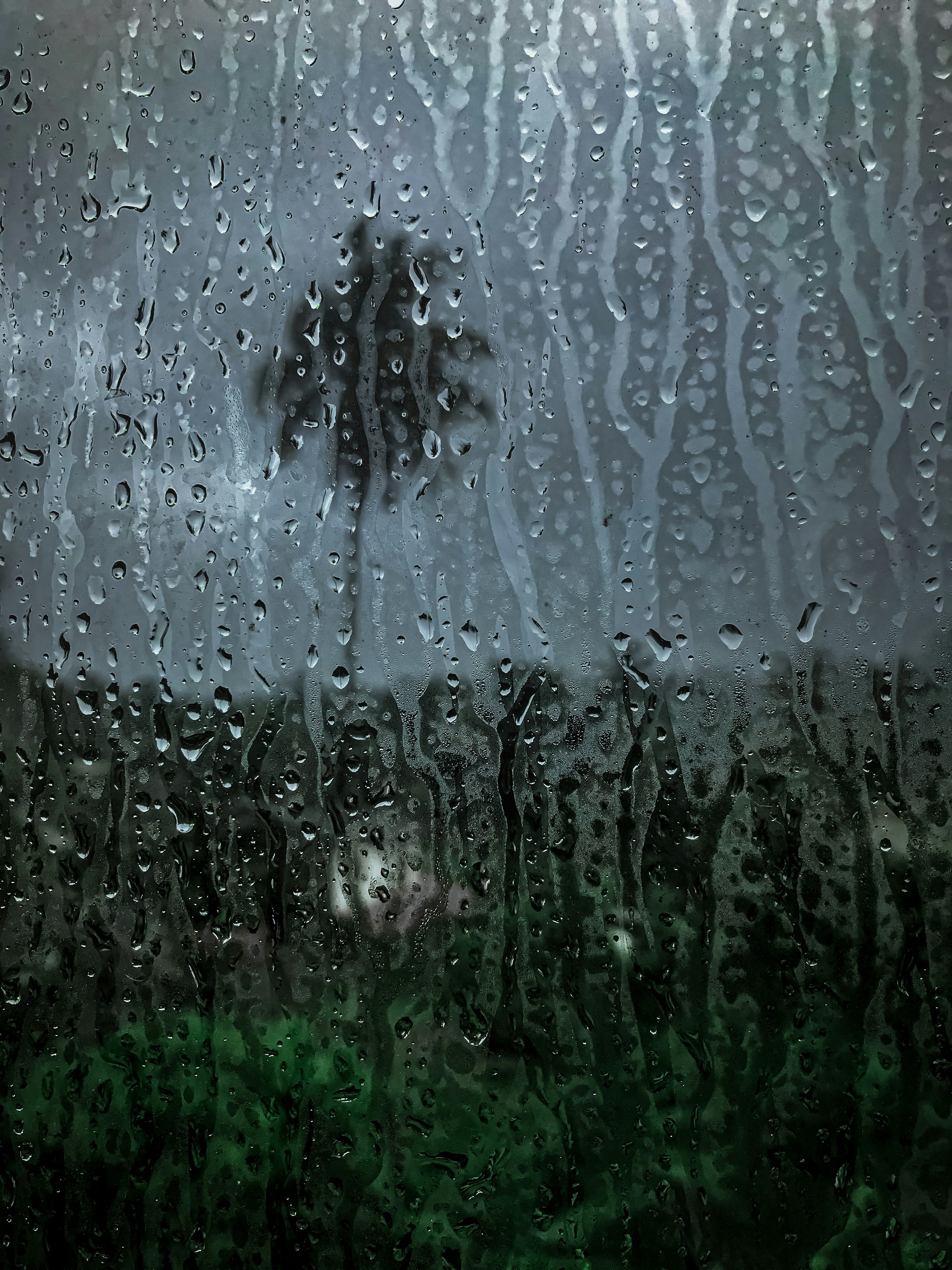
Photo by Madushanka Bandara on Unsplash
Sometimes that old sense of not belonging swirls up inside me like a storm. Like upside-down rain drumming through my core. A gravitational pull so hard and deep, the rest of my life fragments into pieces I can hardly see.
Getting through these storms feels like walking underwater with a weighted belt… not knowing if I’ll ever get to see the sky again.
My body knows these storms. By now, it’s weathered countless versions of them. Some days it doesn’t take much to trigger one—
an unkind word, a critical glance, a hint of doubt or disbelief.
And then the wave comes.
But five years into practising ‘Focusing’ (an embodied, deep listening process), I’m learning to weather them with more faith and courage.
Faith that the sun will shine again. Faith that this too shall pass.
Courage that even when the storm feels unbearable, there’s a way I’ve learned to be with it… a way that helps me reach the other side sooner.
Turning Toward, Not Away
Someone asked me recently, “Have you managed to overcome many of your patterns thanks to Focusing?”
I laughed. Not because the question was silly, but because it pointed to a common misunderstanding. Focusing is not about overcoming anything.
It’s not about fixing or deleting parts of ourselves (or others) that we don’t like. It’s a practice of turning toward them—with friendliness, with curiosity, with care.
We offer invitations like:
“Hello, I’m here now. I see you.”
“Can I sit with you a little while?”
“Maybe you could let me know what you’re not wanting?”
“Maybe you could let me know what you are protecting me from?”
And often, when we truly listen, we discover that what we had labelled as “bad” or “stuck” is actually a form of love. A fierce protector, doing all it can to keep us safe.
That’s what happened for me recently, when I sat with this familiar pattern that I’m calling the ‘Storm of Not Belonging’.
It rose up inside me like a force of nature…
wild, consuming, stopping me in my tracks.
I couldn’t see inside it. I couldn’t escape it—I could only be present, letting it know I wasn’t going anywhere.
And slowly it revealed the intricacy of its shape in my body. Not as destructive chaos, but as a protector. I understood how it held me frozen, so I wouldn’t risk being seen… or judged, or rejected.
And when I asked what it was protecting me from, it didn’t show anger, it showed heartbreak.
A jagged grief rose in my chest. Old, sharp, familiar. Something to do with my father. The impossibility of being “enough” in his eyes. The shame and rejection I experienced with him was the weather system in which this storm found its form.
It said to me: “Better to be engulfed by a blinding storm than to feel that heartbreak again.”
The Felt Sense
This is one of the many gifts of Focusing: knowing how to sit with what feels difficult or uncertain.
Sensing how it lives in the body.
Listening, slowly, for the deeper story it holds.
Psychologist and philosopher Eugene Gendlin coined the term felt sense to describe this inner kind of knowing: “the body-sense of the situation.”
He noticed that therapy clients who could pause and feel this fuzzy, bodily “something” (before they had words to describe it) were far more likely to experience real, lasting change.
“You may have no idea what to do,
but the bodily version of the situation will move
through small steps which cannot happen otherwise.”
—Eugene Gendlin, When You Feel the Body from Inside, There Is a Door (2000)
In other words, our bodies know the way forward.
We just need to slow down… and listen.
And this isn’t only personal.
When we slow down together… when we listen in groups and communities with this same kind of presence, something shifts.
We begin to find more holistic, life forward ways… together.
“Focusing is not just another method. Focusing is a way of being present to the life within us, and how that life wants to live….”
The Web of Life
Recently I listened to John Seed (author of Thinking Like a Mountain) and Skye Cielita Flor talk with Nate Hagens about ecological identity—a remembering of ourselves not as separate spectators, but as living strands in the web of life.
And it struck me: Focusing is one way we remember that identity… a pathway to ecological belonging.
As we bring attention and care to what’s inside, we begin to re-member ourselves—not just as individuals, but as within a wider living field.
We begin to sense that our grief, our pain, our longing to belong… is not just ours.
It’s cultural.
Ancestral.
Planetary.
This pattern of Not Belonging is not only mine.
It’s a response to a worldview that teaches us (early and often) to conform:
To look and act in a certain way. To seek external validation.
To cut ourselves into parts, and exile what doesn’t fit.
Gendlin called this kind of thinking the “unit model”: a worldview that sees life as made up of separate, interchangeable parts… like a machine.
But that’s not how living systems work.
Life is complex, interwoven, relational. Always in process.
And our bodies know this.
“Our bodies do our living.
Our bodies are interaction in the environment; they interact as bodies,
not just through what comes with the five senses.
Our bodies don't lurk in isolation behind the five peepholes of perception.”
— Eugene Gendlin, The Primacy of the Body, Not the Primacy of Perception (1992)
Focusing helps us return to this knowing… that we are woven into a much wider living system than our minds alone can ever contain.
The Gifts Hidden in Exile
As I stayed with my embodied sense of this Storm of Not Belonging, another thread revealed itself.
It wasn’t just about shame or grief.
I saw something else: the need for someone to say “yes” before I could trust my own voice, my own creative impulse.
A lifetime of abandoning my ideas the moment they weren’t welcomed with open arms or encouraging words.
A lifetime of waiting—for permission, for reassurance—before I could believe in myself.
This too is a pattern. A survival strategy learned early.
And beneath it? A core longing: to trust my own knowing.
When I asked my body what it would feel like—to believe in myself, even without approval or support—I felt something shift.
A breath. An expansion. A quiet strength.
Like the prow of a boat, steady in rough seas. Not rigid.
Just connected and guided by an inner compass.
This is the kind of discovery that Focusing makes possible.
It’s not conceptual. It’s a felt shift you can carry forward in your body. It’s real transformation.
The Gift Discovery process supports this too. It helps us find the gold that sparkles through our most difficult experiences.
It helps us get in touch with what matters…
The ways we care. The contributions we long to make…
Often because of the very things we’ve longed for or missed.
These are the unique threads we each carry…
And which our community needs in order to thrive.
When we discover our gifts in this way—from the inside out—we’re more likely to act from wholeness… rather than from shame or obligation or fear.
And when we do this in community, we create cultures of reciprocal listening, acceptance and belonging. We discover how to meet life’s challenges together.
Myth-lover Sophie Strand, author of The Body is a Doorway, writes:
"What if those who survived trauma and early abuse could call themselves doorways?
Too big and too wide for binaries of good and bad...
Our nervous systems and our bodies are openings to stories that are vital right now as we confront cultural chaos, mass extinction, and climate collapse?"
The Freedom Bird
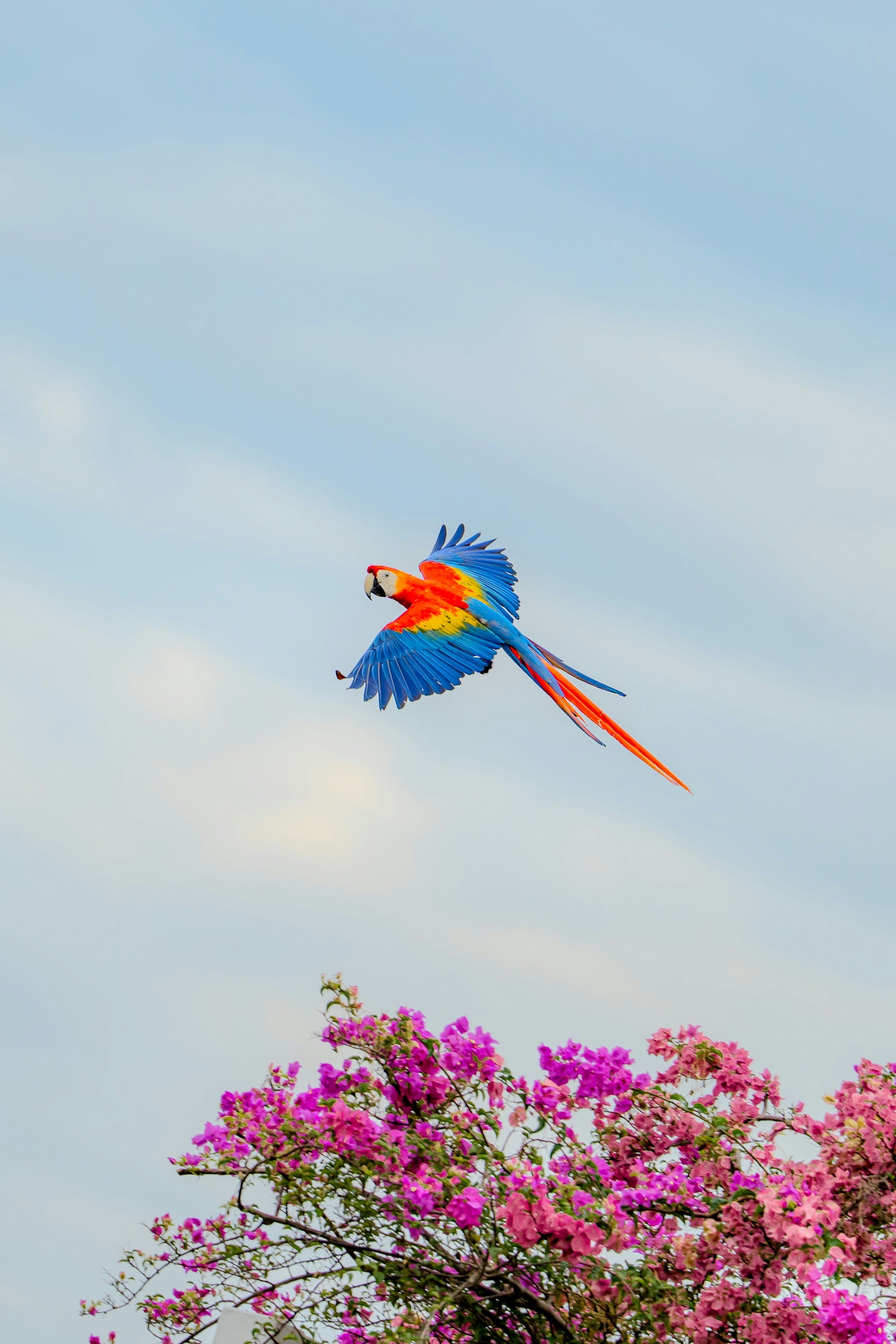
Photo by Happysurd Photography on Unsplash
There’s a traditional tale I love called The Freedom Bird.
I first heard it on the Dragonfly Tales podcast by Emily Hanna-Grazebrook, who shares that versions exist in Thailand, Vietnam, and India.
It tells of a hunter who enters the forest seeking something beautiful to kill and mount on his wall.
He finds a bird with feathers all the colours of the rainbow.
He tells it, “If you can sing a song as beautiful as you look, I won’t kill you.”
The bird sings:
“Na na na na na naaah!”
A simple, silly tune.
The hunter finds it ugly, unacceptable… and shoots the bird.
But no matter what he does to silence it—chopping it into a hundred pieces, boiling it, burying it, locking it in a box, and sinking in the river—he keeps hearing that song!
Eventually, the box drifts downstream and is found by children.
When they open it, out fly one hundred rainbow birds singing that same tune… One that the children delight in!
When the hunter hears the bird’s song in the forest again, he says:
“Now I know who you are. You are the Freedom Bird.
And no matter what I do to silence your song, you will only multiply and grow stronger.”
For me, this is a story of what happens when we try to destroy what we don’t understand or accept…
In nature, in our communities, or within ourselves.
Listening as an Ecological Practice
So many of us treat our own painful or uncomfortable patterns the way the hunter treated the bird.
We try to bury them. Dissect them. Replace them. Destroy them.
But Focusing teaches us another way:
To sit beside them.
To feel their shape.
To listen for what they’re carrying.
And to trust that when they are fully heard, they change—not because we force them to, but because life moves forward when it’s met with acceptance and respect.
This, to me, is an ecological practice.
It's how we learn to think and feel with life, not against it.
It’s why I’m so passionate about sharing this practice with others, and in community, as a Focusing guide and teacher.
I believe it’s one of the ways we can begin to create a world in which belonging is not conditional.
Where we honour each other’s complexity.
Where we grow resilient, caring communities by listening—both inwardly and outwardly—with gentleness and respect.
As we welcome what we have feared or rejected in ourselves—and in each other…
Something changes.
Something grows.
Something remembers how to be whole.
May we be like those children by the river:
Curious. Willing to open the box.
Willing to let the song of the exile rise again.
If this piece speaks to something in you, I’d love to hear your reflections in the comments.
You’re also welcome to share it with others who might be weathering their own storms—inner or outer—and quietly rediscovering their song.
Sophie Strand says: “Don’t write a story you think will be hip. Write the story that will save your life. If it saves yours, it will probably save someone else’s.”
My Focusing practice and my passion for Gift Discovery have given me the courage to share personal stories I once kept hidden. Stories that now feel like threads others might recognise, or even be strengthened by.
I am a Certified Focusing Trainer and Practitioner, a Certified Core Gift Discovery Trainer, and a Community Story Weaver with Befriend in Western Australia.
I offer courses, workshops, and one-to-one guidance in Focusing and Gift Discovery—supporting people to listen deeply to themselves and one another… and to grow more connected, caring, and resilient communities where all gifts are welcome.
This is so beautiful Nicola. Thank you.
This is so beautiful, healing, and inspiring. I'm so grateful to know you; you keep shining a light in my life and for many others too -- and, wonderfully, also for you! Thanks and hugs xx